How to make a conference seating plan
- Choose a room setup. Start from the workshop (a dais and classroom tables) or the boardroom, or blank, and set the room size.
- Lay out the tables. Add classroom tables, rounds, a U-shape or rows of chairs from the Add menu, and the stage, screen and doors.
- Add the attendees. Paste or import the attendee list with each person’s company or team, and tag speakers and VIPs.
- Set the rules. Keep speakers on the dais, colleagues together, competitors apart, and VIPs near the front.
- Seat and print. Press Smart arrange, then download the seating plan and an alphabetical list for registration.
The plan above is a workshop: six speakers at a dais on the stage, and 52 attendees at ten classroom tables of six facing them, each company seated together. A rule keeps the speakers on the dais. Switch to Boardroom for a meeting of 14 at one table, or Theater for a talk in rows.
Conference seating styles
| Style | Best for | In the chart |
|---|---|---|
| Theater | Keynotes and talks | Rows of chairs |
| Classroom | Training, note-taking | Head tables turned to face the front |
| Banquet or cabaret | Group work, dinners | Round tables |
| U-shape or hollow square | Discussion, workshops | U-shape table, or four long tables |
| Boardroom | Small meetings | One long table with end seats |
See them drawn to scale in types of seating arrangements.
Seating protocol for meetings
- The chair sits at the head, facing the door, with the most senior guest on their right.
- At a dais, the moderator sits in the middle and speakers sit in speaking order or by seniority.
- In a negotiation, each side sits together, facing the other, with the leads opposite each other.
- At a conference dinner, put a host at every table and mix companies so people meet.
Registration and badges
Import the attendee list from your registration spreadsheet (name, company, notes). Download PDF prints the seating plan and an alphabetical list to keep at the registration desk; the seating card maker prints table numbers and name cards. For a gala dinner after the conference, see the banquet seating chart generator.
Conference and meeting seating plan templates
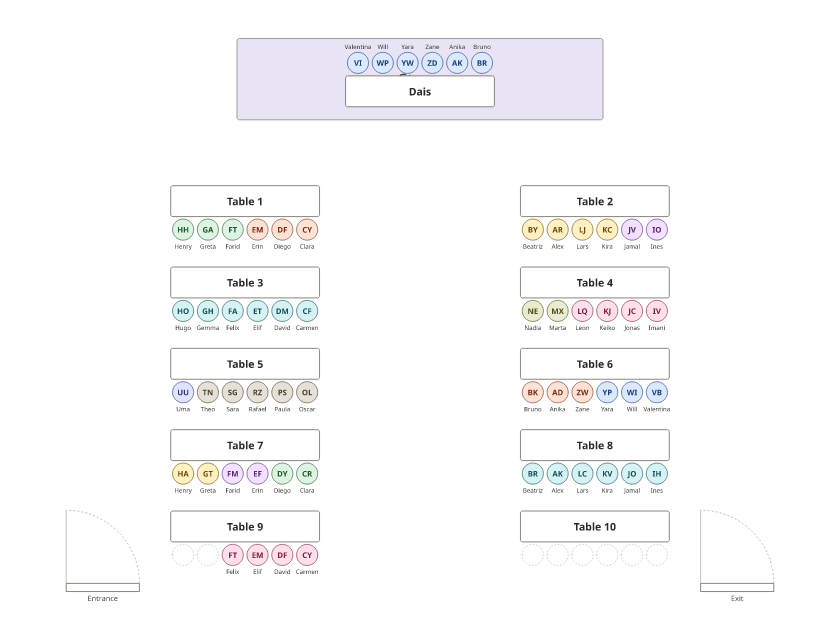
PDF, Letter · A4 · Blank: Letter · A4
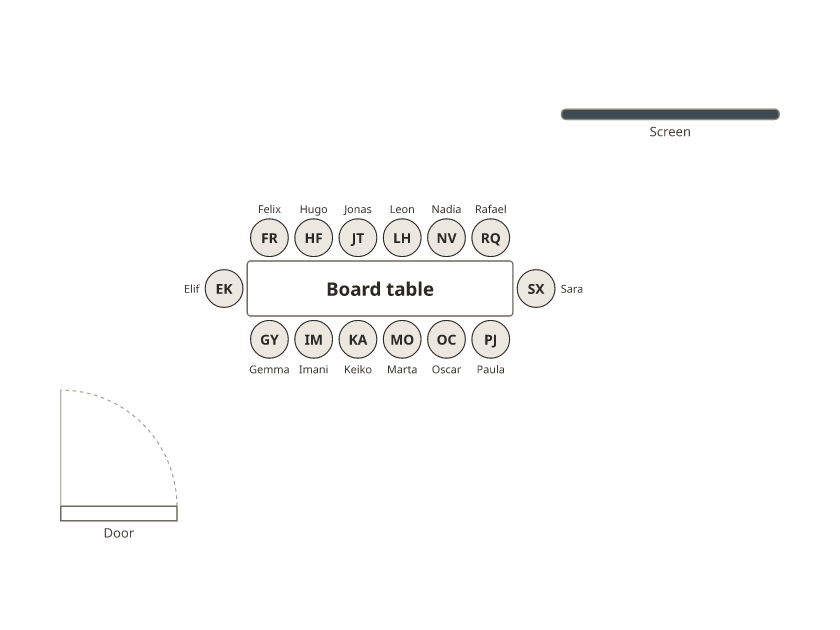
PDF, Letter · A4
Frequently asked questions
What seating styles are used for conferences and meetings?
Theater rows for talks, classroom tables for training, round tables (banquet or cabaret) for group work, a U-shape or hollow square for discussion, and one boardroom table for small meetings.
What is a dais seating arrangement?
A head table on a raised platform facing the audience, for speakers or a panel. The moderator or host usually sits in the middle, with the most senior speakers nearest them.
Where does the chair sit in a meeting?
At the head of the table, facing the door if possible, with the most senior guest on the chair’s right. In a negotiation, each side sits facing the other. More in seating protocol.
How do I seat a debate?
Two sides facing each other across the room, with the chair or moderator at the end between them. Use two rows or two long tables, or arcs of chairs for a chamber.
Can I keep colleagues together and competitors apart?
Yes. Give each attendee their company as a group: colleagues sit together. Add a keep-apart rule between two companies to separate them.
Is there a conference seating plan template?
Yes. Download the workshop and boardroom PDFs below, or the blank workshop room, or press Use this layout above to keep the room.