Classroom Seating Arrangement Ideas
Seven ways to arrange a classroom, each drawn for a real class, with what each layout is good for and how to seat students so the room works.
Choose by what you’re teaching
There’s no single best layout. Rows keep attention on the front, pairs and groups get students talking to each other, and a U-shape puts everyone in the same conversation. The diagrams below show the same class of 28 in each layout (24 on the carpet), with the board at the top, so you can compare how much space each one takes.
Rows
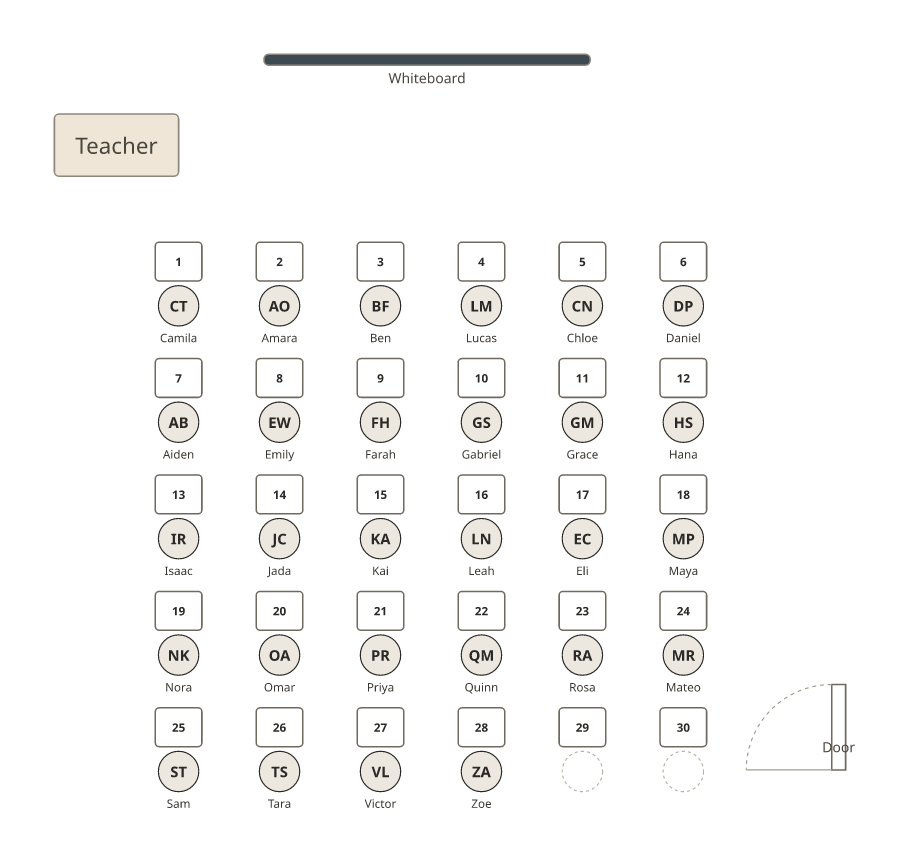
Good for: tests, direct teaching, and a class that talks too much. Everyone faces the board and it’s easy to keep two students apart. Watch out: students at the back are far from you; walk the aisles and rotate who sits at the back.
Pairs
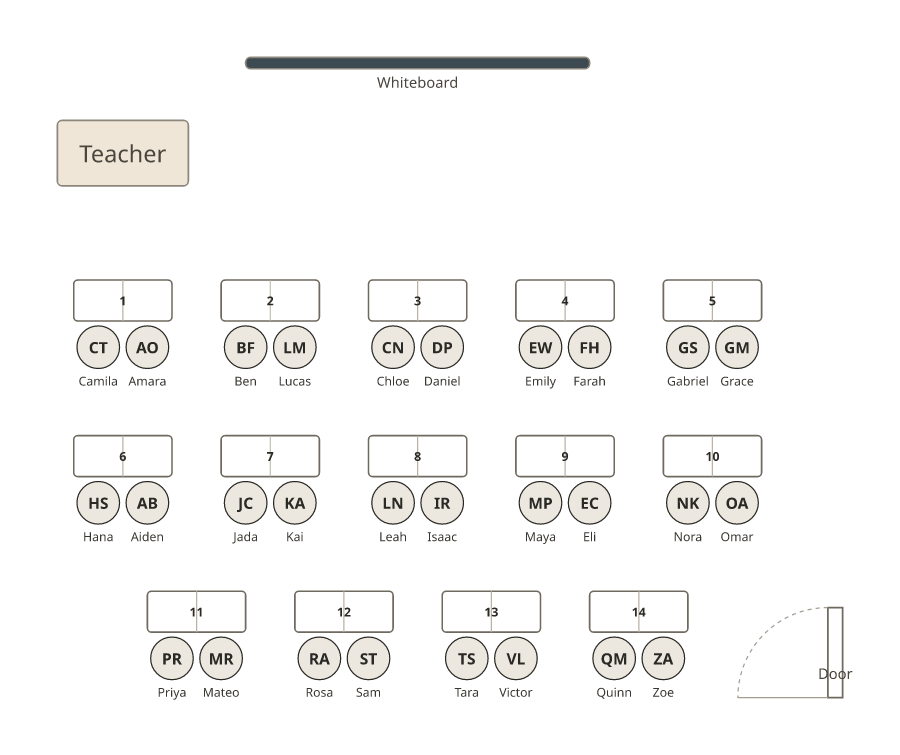
Good for: partner work, reading buddies, checking each other’s answers. Each student has one clear neighbour, which makes pairing deliberate. Watch out: the partnership matters more than the desks; change partners regularly.
Groups of four
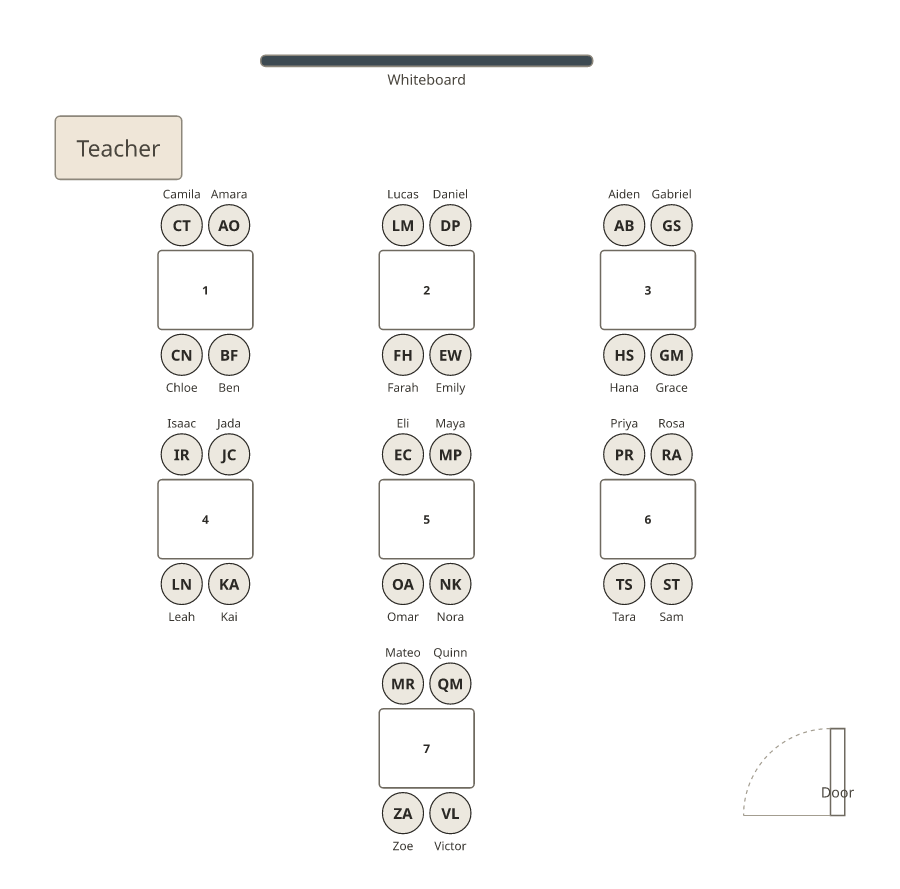
Good for: group projects, stations and discussion in small groups. Watch out: everyone in a group is a neighbour, so split students who distract each other across groups, and turn groups so nobody faces directly away from the board.
U-shape
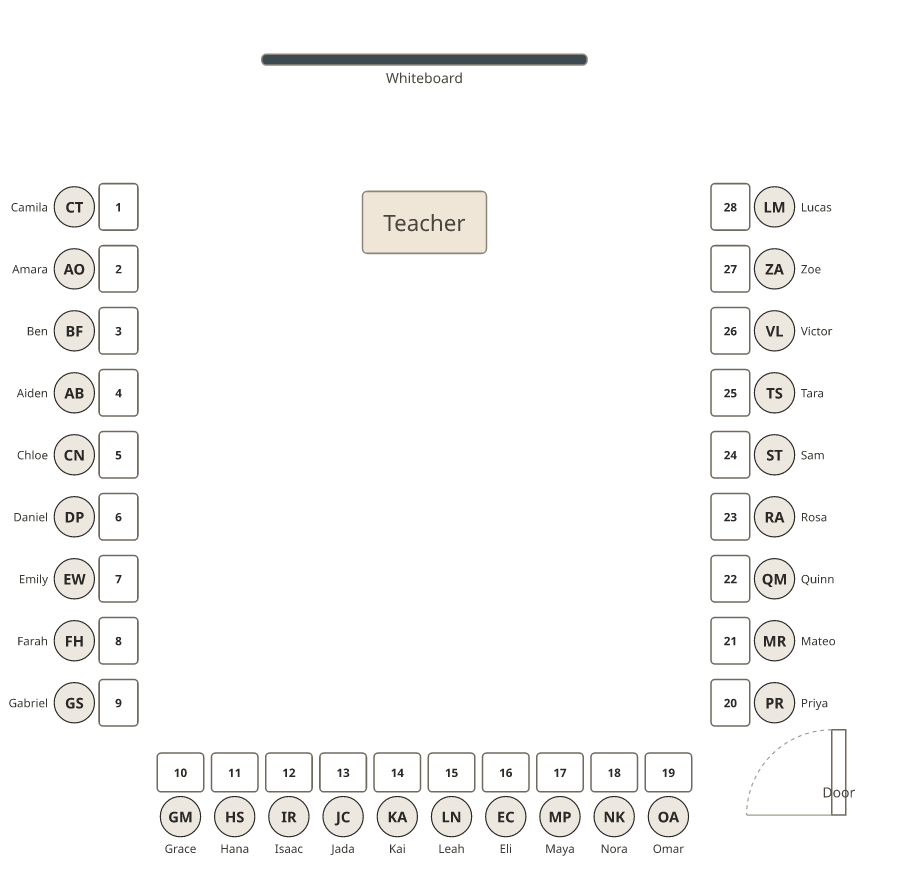
Good for: discussion, seminars, presentations and a smaller class. You can reach every student from the middle. Watch out: it uses the most wall space; with more than about 30 students, a double U (an inner and an outer ring) fits better.
Tables
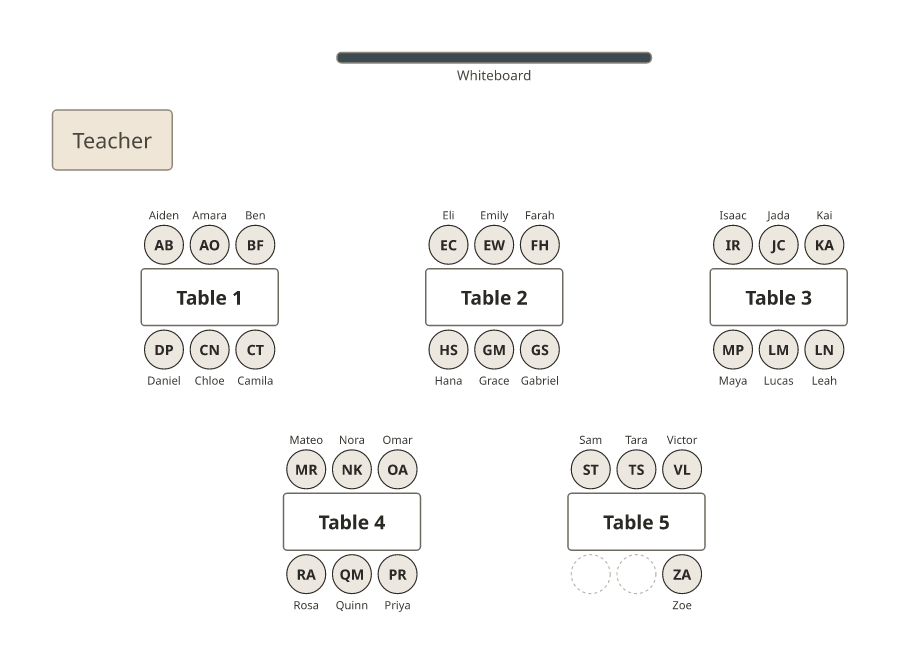
Good for: rooms with tables instead of desks, younger classes and hands-on work. Watch out: students on the far side face away from the board; angle the tables, or have that side turn their chairs during teaching. Triangle or trapezoid desks work the same way: treat each cluster as one table.
Carpet spots
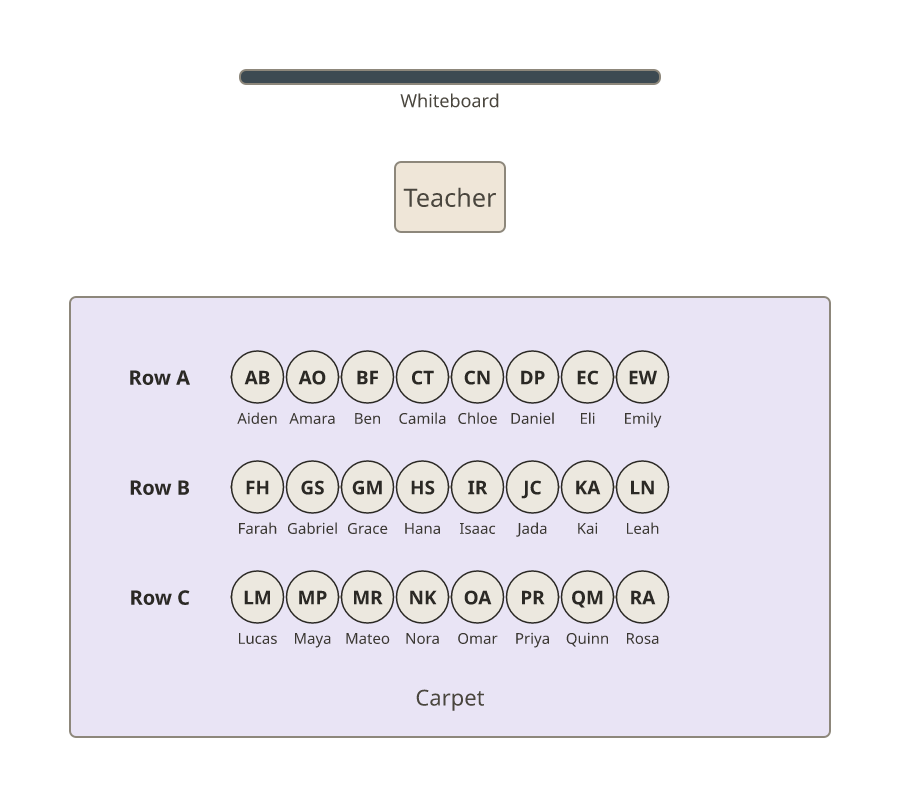
A carpet or rug seating chart gives each child a spot for circle time and read-alouds. Put children who need to see or hear well in the front row, children who chat at the ends of different rows, and mark spots with tape or the rug’s pattern. Change the spots when you change the desk chart.
Computer lab
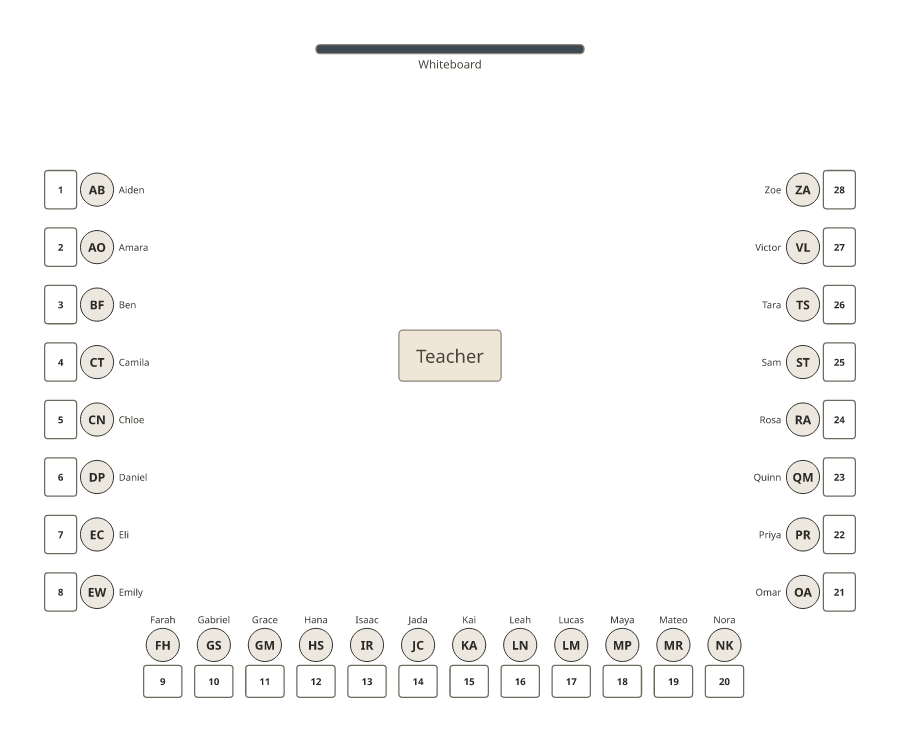
Desks around the walls let you see every screen from the middle of the room. For teaching, have students turn their chairs to face the board, then back to the screens.
Seating a chatty class
- Face the front. Rows or pairs make side conversations harder than groups do.
- Separate talkers properly: not side by side, not one behind the other, and not in the same group.
- Near your path. Seat students who need reminders where you teach and walk, not in a back corner.
- Calm students as buffers between students who set each other off.
- The front row for needs first: students who need to see or hear well, then everyone else.
- Change it on your schedule, every few weeks or each unit, so a new chart isn’t a punishment.
In the classroom seating chart generator, a keep-apart rule keeps two students out of each other’s reach in any layout, and the random seating chart generator reshuffles the class while avoiding last time’s neighbours.
Desks for 24 to 30 students
| Students | Rows of single desks | Pairs | Groups of four | Tables of six |
|---|---|---|---|---|
| 24 | 6 × 4 | 12 | 6 | 4 |
| 25 | 5 × 5 | 13 (one seat free) | 7 (four of four, three of three) | 5 (five at each) |
| 28 | 7 × 4 | 14 | 7 | 5 (three of six, two of five) |
| 30 | 6 × 5 | 15 | 8 (six of four, two of three) | 5 |
Leave about 36 inches (90 cm) between rows of chairs so you and the students can walk through.
Elementary, middle and high school
- Elementary: tables or groups for most of the day, a carpet for whole-class time, and a clear path to supplies.
- Middle school: pairs or groups that change often; rows for tests and for a class that needs settling.
- High school: rows or pairs for lectures and labs, a U-shape for discussion-based classes, and a new chart each grading period.
Frequently asked questions
What is the best seating arrangement for a classroom?
The one that fits the lesson. Rows suit tests and direct teaching, pairs suit partner work, groups of four suit group projects, and a U-shape suits discussion. Many teachers keep one main layout and move to another for particular activities.
What is the best seating chart for a chatty class?
Rows or pairs facing the front, with talkative students apart from each other (not side by side, not one behind the other, not in the same group) and close to where you teach. Put calm students between them and change the chart every few weeks.
How should I arrange 30 desks?
Six columns by five rows of single desks, 15 pairs, or eight groups (six of four and two of three). Leave about 36 inches (90 cm) between rows so you and the students can walk through.
How often should I change the seating chart?
Many teachers change it every few weeks, at the start of a unit or each grading period. A shuffle that avoids last time’s neighbours makes it quick and keeps it fair.
How do I arrange a classroom with tables instead of desks?
Treat each table as a group: four to six students, turned so nobody has their back fully to the board. Keep students who distract each other at different tables.
How do I make a carpet seating chart?
Give each child a spot in rows on the rug, facing your chair, and keep children who need to see or hear well in the front row. Mark the spots with tape or the rug’s pattern, and move children who chat to the ends of different rows.