Seating Chart Ideas and Examples
Five real seating charts for different events, easy and fun ways to show guests their seats, and which room layout suits which kind of event.
Pick the format first
A seating chart can take four forms. Most events use one or two:
- A floor plan with names: the room, the tables and who sits where. The best for planning, and for staff on the day.
- A list by table: each table with its guests. Guests see who they’re sitting with.
- An A–Z list: every guest in alphabetical order with their table. The quickest to read when many people arrive at once.
- Cards: an escort card per guest with their table, or a place card at each seat.
Make the plan once and the other forms follow from it. Not sure about the terms? See seating plan or sitting plan for what each one means.
Seating chart examples
Five real plans, all made in the seating chart generator. The wedding, dinner, awards dinner and band plans are built-in examples you can open and change.
Wedding reception
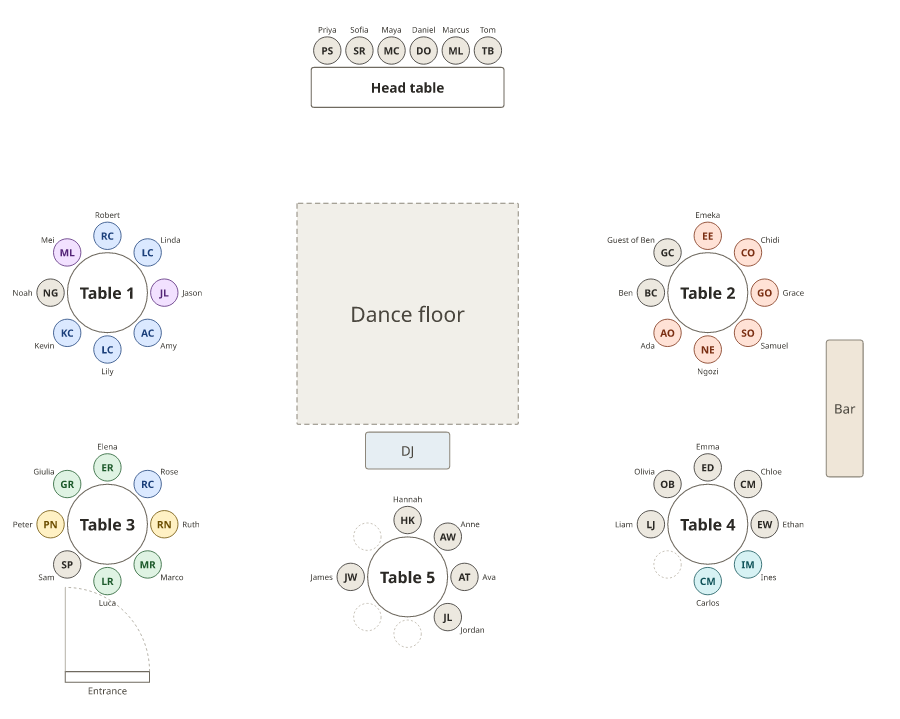
Why it works: colours identify households so you can review who sits together, the head table faces the room and nobody is seated in the doorway. For more, see our wedding seating chart ideas or open the wedding seating chart generator.
Dinner party
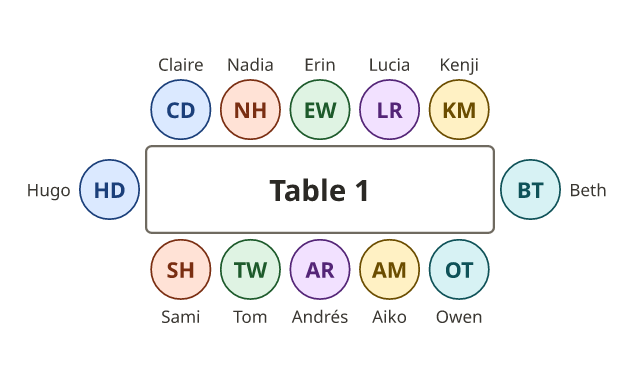
Why it works: at one table, the plan is about conversation. Splitting couples so each person talks to someone new mixes the table, and hosts often take the ends. For a dinner this size, place cards at each seat are all the display you need.
Awards dinner or gala
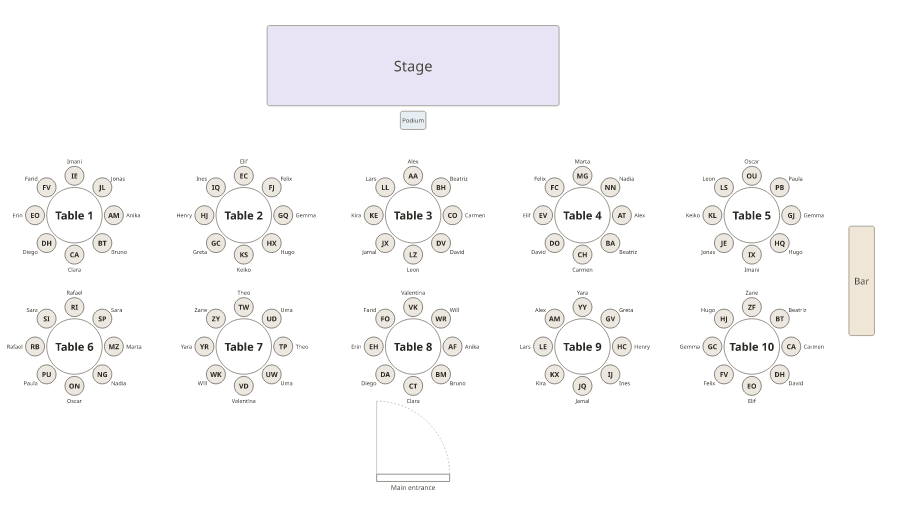
Why it works: every table has a clear view of the stage, guests of honour sit near the front, sponsors are spread across the tables, and the bar is out of the way of the entrance. Numbering in reading order helps staff find tables fast. The table planner handles events like this.
Meeting or workshop
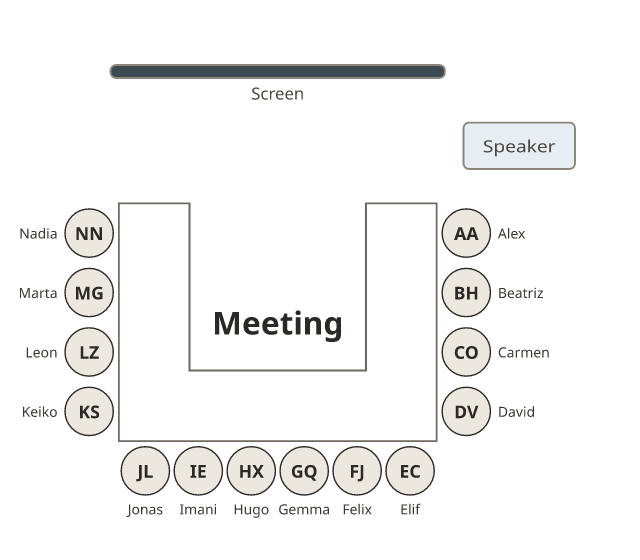
Why it works: everyone can see the screen and each other, and the speaker can walk into the U. Good for training, board meetings and workshops where people talk to each other as well as to the front.
Concert band
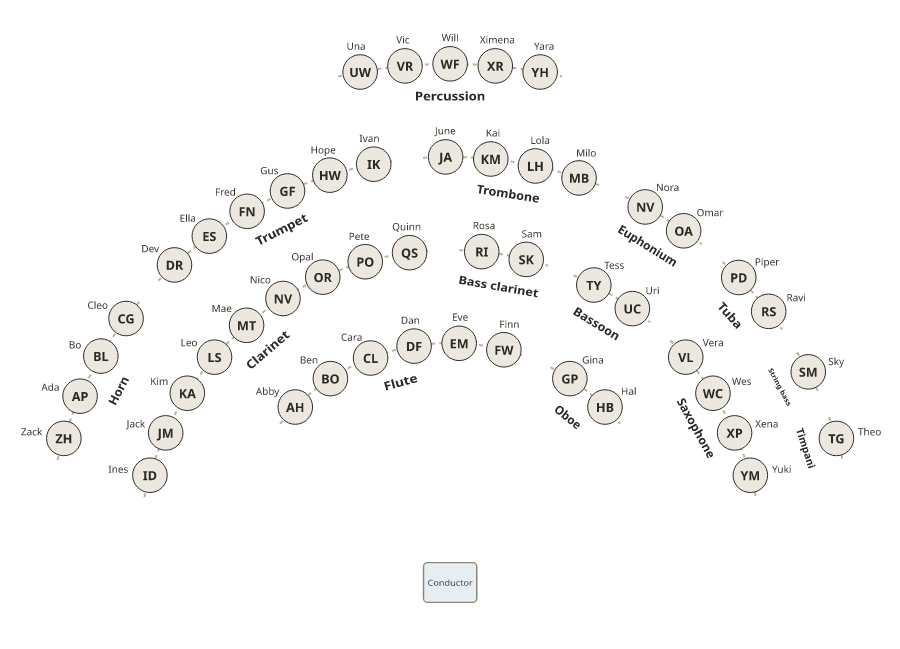
Why it works: sections sit together, quieter instruments in front and percussion at the back. Make yours with the band seating chart generator or the orchestra seating chart generator.
Classroom
Rows, pairs, groups and a U-shape are the usual classroom seating charts. Our classroom seating arrangement ideas show seven layouts with diagrams, and the classroom seating chart generator makes yours from a class list.
Easy and simple seating chart ideas
- A framed A–Z list. Print the alphabetical list on Letter or A4 and put it in a large frame by the door. Nothing to assemble.
- One sheet per table on a board. Print each table’s list and pin them to a cork or foam board in a grid, numbered like the room.
- A chalkboard or whiteboard. For a small event, write the tables and names by hand. Write from a printed list so nobody is missed.
- Place cards only. At one or two tables, a card at each seat is all you need.
- A link on their phones. Share a read-only link where guests search for their name, as a backup to the printed chart.
For a printed sign in a few minutes, the seating chart sign maker turns the plan into a poster by table or A–Z.
Fun seating chart ideas
- Music: name tables after songs or albums and hang each table’s list on an old record or a CD.
- Travel: a big map with a pin for each table, named after a city, or boarding passes with the table as the gate.
- Sport: tables named after teams, with the chart styled as a scoreboard or a league table.
- Films: a cinema-style board, with tables as screens and guests listed like a programme.
- Reunions: each guest’s old photo beside their name, grouped by table.
- Children’s parties: tables named after colours or animals, with a matching sticker on each child’s card.
- A puzzle: each guest’s name on a puzzle piece, and the pieces for each table make one picture.
Whatever the theme, keep the names large and plain, and use one table name everywhere: on the display, on the table and in the plan the venue gets. The table planner can name all your tables from a list at once.
Event layout ideas
| Layout | What it is | Best for |
|---|---|---|
| Rounds | Round tables, usually of 8 or 10 | Weddings, galas, dinners with conversation |
| Long tables | Rows of rectangular tables | Family-style dinners, narrow rooms |
| Cabaret | Rounds with seats only on the side facing the stage | Talks and awards with food |
| Theater | Rows of chairs, no tables | Talks, ceremonies, concerts: the most people per room |
| Classroom | Rows of tables facing the front | Training, exams, note-taking |
| U-shape | Tables in a U, open to the front | Meetings and workshops |
| Boardroom | One long table | Small meetings and dinners |
Rounds and long tables can share a room: a long family table in the middle with rounds around it is a popular mix at weddings. Ask the venue which tables and sizes they have before you plan.
Make it easy to read
- Table names largest. Guests look for their name, then the table, so make the table name or number stand out.
- Sort names inside each table alphabetically, even on a by-table chart.
- Fix names once, in the plan, so the chart, the cards and the venue’s copy all agree.
- Eye level and out of the doorway, so a queue doesn’t block people coming in.
- A spare A–Z list with whoever is greeting guests, for anyone who can’t find their name.
Frequently asked questions
What should a seating chart include?
Every guest’s name and their table (or seat), with table numbers or names that match the tables in the room. A copy for staff can add meals, allergies and a count for each table.
What is the easiest way to make a seating chart?
Paste your guest list into a seating chart generator, add your tables, let it seat everyone, then move anyone by hand. Print the plan or an alphabetical list and you’re done; nothing has to be drawn by hand.
Does a small party need a seating chart?
Not usually. At a single table, place cards are enough, or no plan at all. A chart starts to help once there are several tables, because guests need to know which table is theirs.
How can I make a seating chart fun?
Name the tables after something that fits the event, such as songs, places, films or teams, and make the display match: records for a music theme, a map for travel, a scoreboard for sport. Keep the names themselves plain and easy to read.
Which layout fits the most people?
Rows of chairs (theater style) fit the most people into a room. Round tables fit fewer but suit meals and conversation, and long tables fit more guests than rounds into a narrow room.
Can I make a seating chart for free?
Yes. The seating chart generator, the sign maker and the PDF downloads on this site are free, with no sign-up, and your names stay on your device.